Sharing borders with Kazakhstan, Tajikistan, Uzbekistan, and the People's Republic of China, the Kyrgyz Republic is situated at a vital crossroad of Central Asia. To support the country's long-term stability and prosperity, the United States focuses on strengthening the country's democratic gains, promoting diversified economic and social progress, and supporting stronger ties across the region.
USAID works to strengthen the capacity of the Kyrgyz Republic’s government and people to lead its own development and become a strong and resilient partner. USAID leverages strategic partnerships that boost connectivity between the Kyrgyz Republic and other Central Asian countries and leads on gender, equity, and social inclusion interventions.
Democracy and Governance
Supporting efforts to improve political processes, policy formation, and service delivery, we work closely with the Kyrgyz government, civil society, international community, and its citizens. Our work focuses on helping local governments to improve service delivery; justice systems and institutions to be more responsive; state and private media to ensure citizens have access to reliable and independent information; and civil society to be more robust. Our efforts also help to reduce corruption and ensure a more free and fair election process. Thanks to USAID support, 10 municipalities expanded access to clean drinking water to over 54,000 rural people and three expanded waste collection services to benefit 12,700 people in 2022.
Economic Growth
USAID works with Kyrgyz businesses to strengthen competitiveness, market links, access to finance, and cross-border trade; improve food security; and create sustainable jobs. In 2022, USAID worked with 120 small and medium enterprises, creating more than 21,000 jobs, representing 11% of newly created jobs in the country and $57 million in promised regional export sales. Other areas of assistance focus on energy security, water management, resilient infrastructure, and climate change.
Health and Education
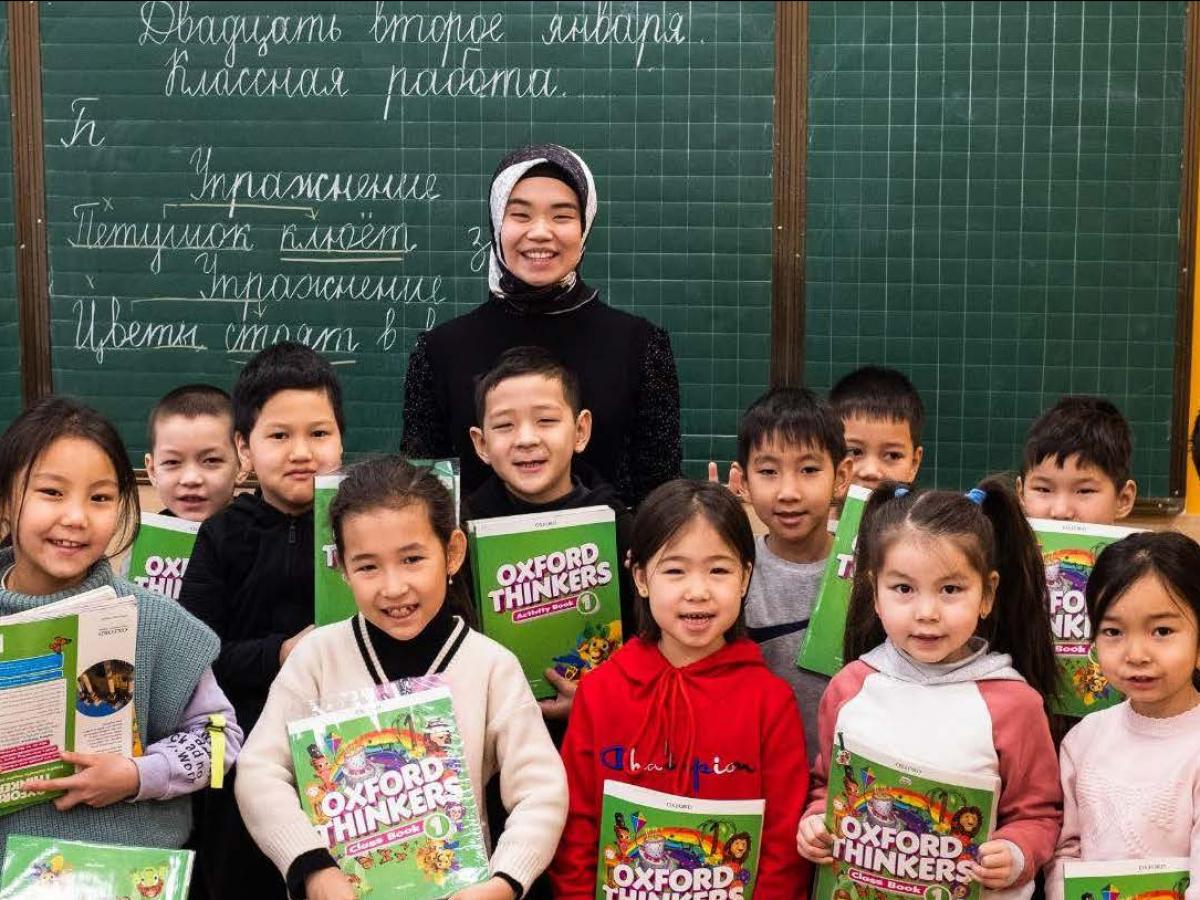
USAID values a healthy and educated population, and it has invested in basic education, TB, HIV, COVID-19 response and recovery, nutrition, and Global Health Security (GHS), as well as health systems strengthening. Working with the government to improve the quality of education for every child, USAID continues to strengthen reading and math skills of more than 470,000 primary school students in 77% schools across the country, develop high-quality learning materials including digital and sign language adaptations, and train school administrators to use effective methodologies. As Kyrgyzstan is an Intensive Support country for GHS, we work multi-sectorally to strengthen regional, national, and local capacity to prevent, detect, and respond to infectious disease threats. The country ranks among the top 30 for new drug-resistant TB cases. USAID helps to build the capacity of health professionals and introduce digital solutions to manage medical information and treatment more effectively. USAID also supports efforts to combat the spread of HIV/AIDS among key populations and promote improved health and nutrition for mothers and young children in vulnerable regions of the country.