


Democracy and Governance
USAID focuses on improving the rule of law, supporting civil society organizations, and contributing to emotional healing and social cohesion to overcome the trauma of the 1994 genocide.
In addition, USAID helps train journalists on investigative reporting skills, so that the citizens remain informed and can hold the government accountable.
Read more about our work in Democracy and Human Rights in Rwanda.
Economic Growth
USAID expands economic opportunities and food security for people in rural areas. Over 70 percent of Rwandans rely on subsistence agriculture, so developing this sector is key not only for food security, but also for nutrition.
Through the U.S. Global Food Security Strategy, USAID is funding programs that strengthen and increase the competitiveness of staple value chains, expand farmers’ access to markets, promote private sector investment in agriculture, and address the root causes of food insecurity.
Read more about our work in Economic Growth in Rwanda.
Health
USAID helps strengthen the health system, end preventable maternal and child deaths, control the HIV epidemic, and combat infectious diseases, with a special focus on inclusivity throughout its programming.
As Rwanda’s largest bilateral donor of HIV/AIDS funding, USAID strategically utilizes U.S. President’s Emergency Plan for AIDS Relief (PEPFAR). Rwanda also benefits from being a part of the U.S. President’s Malaria Initiative (PMI) that provides funding for expansion of strategies and tools for malaria prevention and treatment.
Read more about our work in Health in Rwanda.
Education
USAID helps improve early grade literacy and numeracy in Kinyarwanda and English as a foundation for future learning. As a part of these projects, teachers receive pre-service and in-service training providing them not only with most effective educational techniques, but also tools for delivering quality instruction.
A large focus is on promoting the culture of reading with the teaching staff, parents and community leaders, and creating safe and inclusive spaces for reading.
Read more about our work in Education in Rwanda.
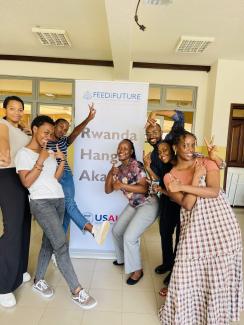
Hinda Ruton for Africa Quantitative Sciences
Rwanda Country Development Cooperation Strategy 2020 - 2025
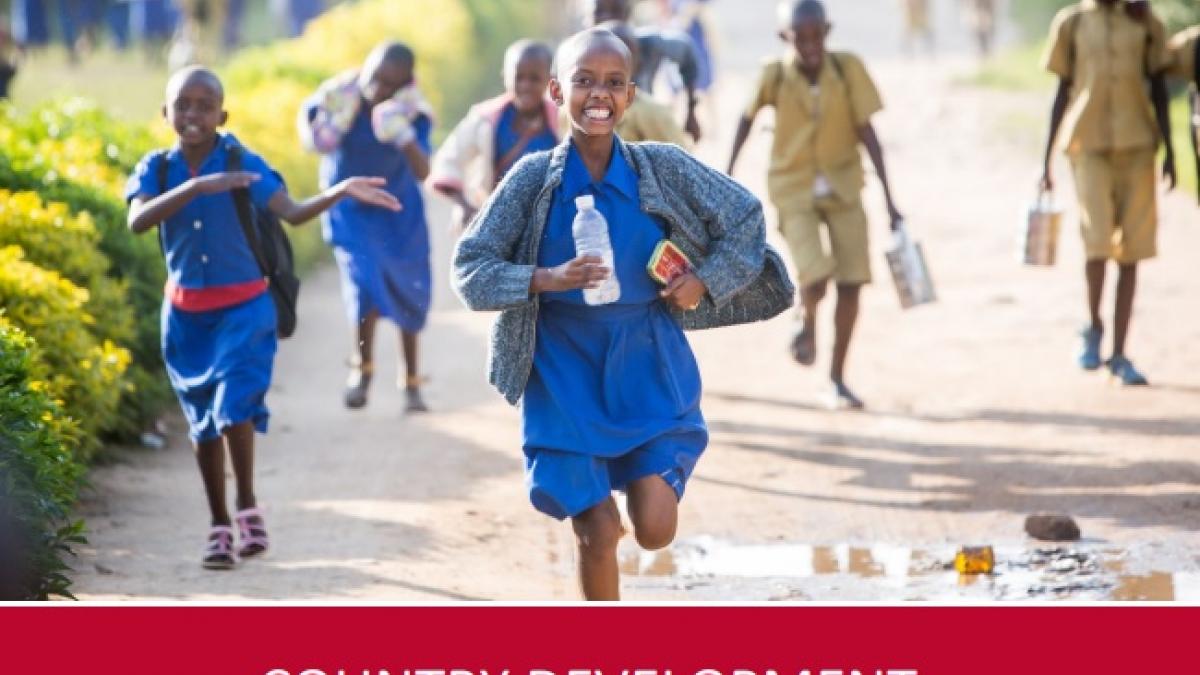
The goal for USAID/Rwanda’s Country Development Cooperation Strategy (CDCS) 2020-2025 is: Rwanda has the strengthened human capital, robust private sector and accountable institutions required to advance self-reliance.