


Building on over a decade of partnership and collaboration with the Government of Liberia (GOL), USAID/Liberia’s health program seeks to improve the health status of all Liberians, especially the most vulnerable: women, girls, newborns, children under age five, and most recently Ebola survivors. USAID pursues this goal through interventions that support the GOL’s Investment Plan for Building a Resilient Health System in Liberia 2015-2021. Our work is guided by the following objectives:
- Increased utilization of quality Reproductive, Maternal, Newborn, and Child Health Services;
- Increased effectiveness of the health system at national and county levels;
- Improved government capacity to control infectious diseases, and
- Increased access to safe water and sanitation.
To ensure the maximum benefit from U.S. Government (USG) investments, USAID supports high-impact Maternal, Newborn, and Child Health (MNCH), Family Planning, Reproductive Health, Malaria, and interventions for ending preventable child and maternal deaths through strengthened health systems and increased access to quality health services.
USAID’s health program comprises of five components—Service Delivery involving government to government funding for the provision of primary health care services; Health Systems Strengthening (HSS) technical assistance; President’s Malaria Initiative (PMI) commodities and technical assistance; the Global Health Security Agenda (GHSA) program support and technical assistance; and Water and Sanitation program support.
Service Delivery
Aligning with the USAID Global Health Initiative’s core principles of country ownership and integrated health systems for sustainable impact, the centerpiece of USAID’s assistance for strengthening the quality and availability of facility based primary health care services is a direct financing agreement with the Ministry of Health. This agreement supports the implementation of the Ministry of Health’s 10-year Health Policy and Plan (2011-2021) and the national Essential Package of Health Services (EPHS) in 115 facilities in Bong, Nimba, and Lofa counties, and the scale up of essential interventions to prevent maternal and newborn deaths, in an additional 63 facilities in Margibi and Montserrado counties. This grant to the GOL covers approximately 34 percent of the population and also builds the capacity of the Ministry of Health to manage and steward the health system at the central and subnational levels. Following the Ebola crisis, USAID supports the restoration of health services in an additional 77 facilities (totaling 255 facilities) bringing the total coverage to 49 percent of the Liberian population. At the community level, USAID support expands access to and use of quality primary care services by training and institutionalizing community health workers and disseminating behavior change messages; expanding access to immunization services and information for children under five; supporting an environment in which youth feel empowered to seek health care; expanding access to clean drinking water; supporting the roll-out of integrated Community Case Management of childhood illnesses, and improving sanitation and hygiene through Community-led Total Sanitation initiatives. In addition, USAID works with the Ministry of Gender Child and Social Protection to strengthen child protection systems for orphans and vulnerable children in foster/kinship care.
Health Systems Strengthening
USAID/Liberia’s Health System Strengthening portfolio covers a comprehensive set of activities to support the Ministry of Health’s post-Ebola recovery efforts. USAID’s investments focus specifically on supporting the Ministry to implement its Investment Plan for Building a Resilient Health System through specific technical assistance to bolster Ministry’s ability at the central, county, and district levels: to improve leadership and governance capacity for stronger decentralized management of health services; to ensure the availability and financial viability of health services; to manage and maintain an adequately-sized workforce of qualified health care providers; to improve the quality, availability, and use of health information system data; to institutionalize quality assurance and quality improvement at all levels of the health system; and to manage the supply chain, storage, and distribution of health commodities and medicines. Technical assistance is provided at the central and county-levels by embedded advisors who work side-by-side with their Ministry of Health counterparts. Introduction of innovative solutions include mobile money payments to health care workers and Short Messaging Service based information reporting is a key foundation of Liberia’s HSS efforts.
President’s Malaria Initiative
President’s Malaria Initiative (PMI) activities are integrated throughout USAID’s portfolio and are focused on improving malaria case management, promoting the quality of medicines, preventing malaria during pregnancy, integrating vector management, and strengthening the health commodity supply chain system to improve availability of medicines to the end users. PMI also provides technical advisors who are embedded within the National Malaria Control Program to support key operations. The vision of the Liberia malaria program is a healthier Liberia with universal access to high quality malaria interventions with no malaria deaths. USAID’s PMI program support coupled with Global Fund interventions in preventing, treating and controlling malaria cover 100 percent of the population.
Water Sanitation and Hygiene
WASH activities cut across the Mission’s health portfolio. The 2014 Ebola outbreak however, identified WASH as a key gap in the health system, particularly for infection prevention and control. The outbreak particularly reinforced the importance of stronger WASH interventions and also presented an opportunity for the Government of Liberia to leverage enormous momentum in the public domain and in the WASH sector to make major improvements in infrastructure and service delivery. Through USAID support, high-impact WASH interventions are integrated into key health activities at both the facility level and community levels. At the community level, WASH interventions improve sanitation through Community Lead Total Sanitation activities and hygiene promotion activities. Community level interventions expand access to clean drinking water through constructing hand dug wells and community mobilization for adoption of point-of-use water treatment technologies. Additionally, USAID supports the Liberia Water Sewer Corporation, with the rehabilitation and expansion of three water treatment plants in the secondary cities of Robertsport, Sanniquellie and Voinjama reaching approximately 30,000 Liberians.
Global Health Security Agenda
USAID, together with other USG agencies, supports the GHSA, with the goal of preventing and combatting newly emerging and re-emerging diseases of animal origin that have pandemic potential among humans. Working in cooperation and complement with other USG agencies engaged in the USG’s National Security Council’s global health security agenda, USAID’s areas of concentration include: zoonotic disease interventions aimed at minimizing the spread of diseases from animals to humans, including interventions intended to improve social behaviors, policies and practices; Antimicrobial Resistance (AMR) that addresses human, animal, agricultural, and environmental factors focused on development of a national AMR strategic plan; strengthening surveillance and laboratory capacity; immunization programs aimed at strengthening the national vaccine system; and Workforce Development aimed at increasing an effective bio-surveillance workforce of clinical and community health providers.
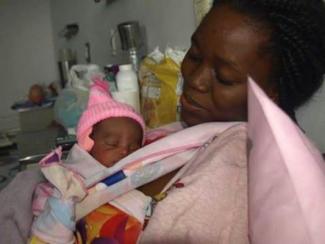
Bendu Doman-Nimley/USAID