


USAID/Liberia works to help Liberia build the institutions and processes essential to consolidating its democratic gains by providing support for, among other things, the transparent and accountable management of public resources, civil service reforms, free and fair elections, the rule of law, domestic resource mobilization, decentralization, stronger civil society organizations, and a more professional media sector.
Effective and Transparent Institutions
USAID works with the Government of Liberia to improve performance and strengthen public sector management capacity. Using in-depth assessments and performance improvement methodologies, our projects aim to bolster human and institutional capacity within targeted ministries, agencies, and commissions (MACs). USAID supports the Government of Liberia’s Public Financial Management Reform Strategy, Government efforts to reform and modernize public and civil service, improved connectivity and information sharing among MACs, and implementation of the National Policy on Decentralization and Local Governance.
Rule Of Law
In continued support of the Justice and Security Pillar of Liberia’s Agenda for Transformation, USAID supports key Liberian legal training and regulatory institutions, strengthening the capacity of legal professionals in Liberia, while promoting access to justice, positive involvement of traditional leaders in peaceful resolution of disputes, and better linkages between formal and informal justice systems. USAID is also supporting the Liberia Anti-Corruption Commission’s investigative capacity.
Civil Society and Media
USAID’s Civil Society and Media programs are focused on increasing access to independent and reliable information by strengthening civil society organizations and increasing their ability to engage in issues-based reforms. Concurrently, USAID is working to professionalize media houses, promote adherence to journalistic standards and ethics, strengthen the legal environment for free media, and improve the Liberia Information Commission’s responsiveness to requests for information from citizens and media institutions.
Land Governance
USAID is working with the Government of Liberia to strengthen its land governance systems through policy and legal reforms and institutional capacity development. USAID is helping to stand-up the Liberia Land Authority as the new unified land regulatory body. USAID will also support new titling systems and community self-identification processes upon passage of the Land Reform Bill.
Elections
USAID is committed to helping Liberia build on the democratic progress the country has made over the last decade. In this regard, USAID continues to strengthen the capacity of the National Elections Commission (NEC) to plan for and implement credible elections. Additionally, USAID supports the work of civil society organizations to amplify the NEC’s civic and voter education programs and to provide oversight of electoral processes, procedures, and events. USAID programs promote women’s political participation in the historic 2017 presidential elections and support international election observation. USAID will also work with political parties to foster member-oriented and issues-based organizations that can comply with NEC regulations as the 2020 senatorial elections approach.
Domestic Resource Mobilization
We are working to build the capacity of targeted Government of Liberia institutions to improve domestic resource mobilization (DRM) and strengthen taxpayer education and engagement on DRM-related issues, with the aim of building tax morale, increasing voluntary tax compliance, and fostering greater trust between taxpayers and the government.
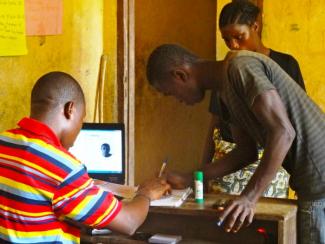
Courtney Babcock/USAID