


STRENGTHENING RESILIENCE TO CLIMATE CHANGE
Achieving sustainable economic growth and food security is inextricably linked to climate change. Malawi faces continued challenges of deforestation, constrained water resources, declining fisheries, limited institutional capacity to manage natural resources, and farming practices that lead to soil erosion and reduced fertility, among others. A scarcity of land resources, extreme poverty, and a rapidly growing population largely dependent on natural resources for subsistence compound these challenges. Heavier but less predictable rains, hot spells, and extended dry periods all contribute to making farmers' decisions regarding planting and harvesting more difficult.
To address these challenges, USAID partners with the Government of Malawi (GoM) and a wide variety of Malawian institutions to advance Malawi’s low-emissions, climate-resilient development. At the national level, USAID is working with the GoM to develop a strategy for combating deforestation and improving forest governance. Site-based interventions to address drivers of deforestation help generate livelihood opportunities for vulnerable households.
Recognizing that many of the gravest threats to Malawians’ health and welfare from climate change involve agricultural production, USAID is investing in climate smart agriculture. As a result of USAID’s support, the doubled-up legume system, which improves soil fertility, yields and nutrition, was adopted by Malawi’s Department of Agriculture and Research Services for promotion by extension agents and is rapidly being adopted by Malawian farmers.
In the fisheries sector, USAID is working to strengthen fisheries governance and improve the livelihoods of fishermen whose livelihoods are threatened by climate change and overfishing. Support for more efficient processing and transport techniques, community co-management and the creation of marine sanctuaries is reducing post-harvest losses while safeguarding Lake Malawi’s globally significant biodiversity.
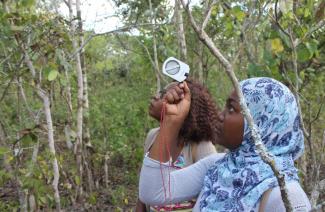
Photo Credit: Gina Althoff/TETRATECH